Practical Insights
AI for Teacher Wellbeing: It's About Training, Not Just Tools
Teacher burnout is a systemic issue. Discover how AI, when supported by professional learning, can reduce workload and boost wellbeing for educators.


Every teacher knows the feeling: the endless to-do list, the emotional toll of supporting every child, the pressure to innovate while juggling an already packed schedule. It's no wonder that teacher wellbeing is a constant concern across USUKUK schools.
The good news? Artificial intelligence is emerging as more than just a shiny new gadget. When integrated thoughtfully and backed by real professional learning, AI can be a powerful ally in easing the burden on educators and boosting overall wellbeing. This isn't about replacing teachers, but about giving them smarter tools.
A common worry
Will AI just add more to my plate?

Peep
Pin this. Share this.
The Systemic Roots of Teacher Strain
It's easy to feel like teacher burnout is an individual struggle, but research shows it's deeply rooted in systemic issues. Edutopia highlights that schools, not just individual teachers, must prioritize reducing stress and burnout. They emphasize that educators' health and wellbeing should be central to school culture, with leaders creating conditions for support Edutopia's insights on teacher wellness.
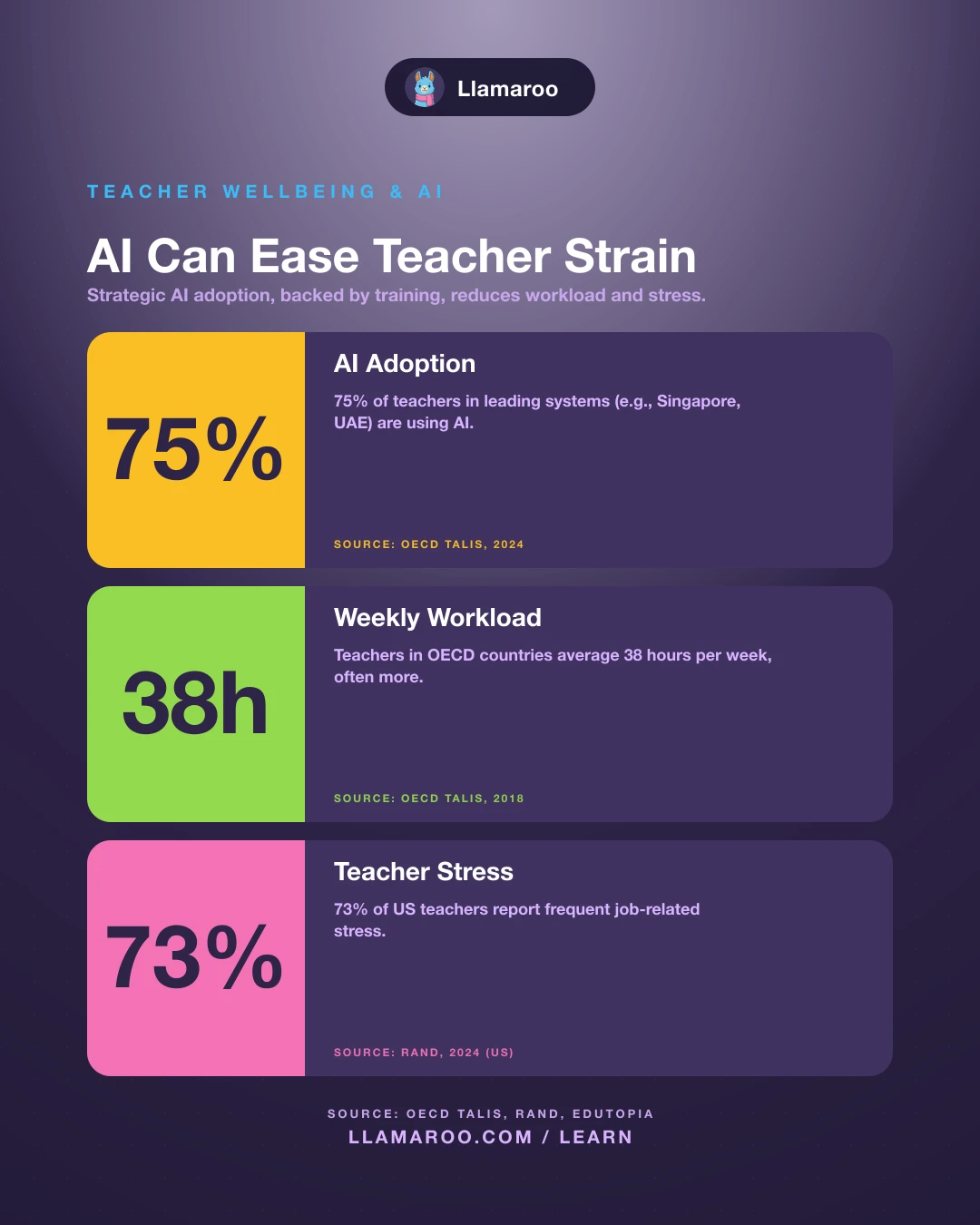
Teachers average around 38 hours per week in OECD countries, but many report working significantly more. In the US, a 2024 RAND surveyUK, similar DfE data suggestsUK, similar DfE data suggests that 73% of teachers frequently experience job-related stress. This high level of stress impacts not only teachers but also the students they serve. A less stressed teacher can create a more supportive and nurturing environment, which is crucial for student mental health and academic success Child Mind Institute on student mental health.
AI as a Partner, Not a Replacement
The OECD's Teaching and Learning International Survey (TALIS) 2024 findings offer a glimpse into the future. In leading education systems like Singapore and the United Arab Emirates, around 75% of teachers are already using AI. What's key is that these teachers are also the most likely to have received professional learning in using AI.
- Lesson Planning: AI can generate diverse lesson ideas, differentiate content for various learning needs, and create assessments, saving hours of planning time.
- Feedback Loops: AI can provide instant, personalized feedback on student work, allowing teachers to focus on higher-level coaching.
- Administrative Tasks: From drafting communications to organizing resources, AI can streamline many non-teaching duties.
The 'how' matters
Making AI work for you

Rocket
Beyond the Hype: Practical Takeaways for Schools and Teachers
For AI to truly support teacher wellbeing, it needs to be integrated with intention. Think of it like a well-designed game: clear goals, immediate feedback, and a sense of progress. AI tools can embody these principles, making tasks feel less like a chore and more like a solvable challenge for both teachers and students.
- Invest in Professional Learning: Don't just deploy tools. Provide dedicated time and training for teachers to understand how to use AI effectively to save time and enhance learning.
- Start Small, Scale Smart: Encourage experimentation with AI for specific tasks, then share successes and best practices.
- Prioritize Wellbeing: Frame AI adoption as a strategy to reduce workload and improve quality of life for educators, not just an academic enhancement.
- Foster a Culture of Support: Create spaces for teachers to discuss AI challenges and triumphs, ensuring they feel supported, not overwhelmed.
When schools commit to supporting their teachers with thoughtful AI integration and robust training, they aren't just adopting new tech. They are investing in the wellbeing of their most valuable asset: their educators. And that creates a ripple effect, improving the learning experience for every child.
Empower your teachers with AI that truly supports them
Llamaroo helps teachers create playable, story-driven lessons from a prompt, voice note, or existing materials, reducing planning time and boosting engagement.