Playable explainer
Student Goals Are Designed, Not Just Set
Effective goal setting for kids isn't about willpower, it's about designing clear paths, immediate feedback, and visible progress.


Have you ever asked your students or your child to set a goal, only to see it fizzle out a few days later? It's a common frustration for both teachers and parents. We often assume that if a goal is clear enough, and the intention is strong, kids will just… stick with it. But that's rarely how it works.
The truth is, effective goal setting for K-6KS1 to KS2KS1 to KS2 students in both the US and UK isn't just about willpower. It's about how the learning experience itself is designed. Like a good game, it needs clear steps, immediate feedback, and visible progress to keep attention alive. This is an insight that can really help teachers who are already stretched, as highlighted by resources like Larry Ferlazzo's advice on student goal-setting strategies.
Quick Check
What's missing from most goal setting?

Bandit
Pin this. Share this.
The game design secret: clear loops
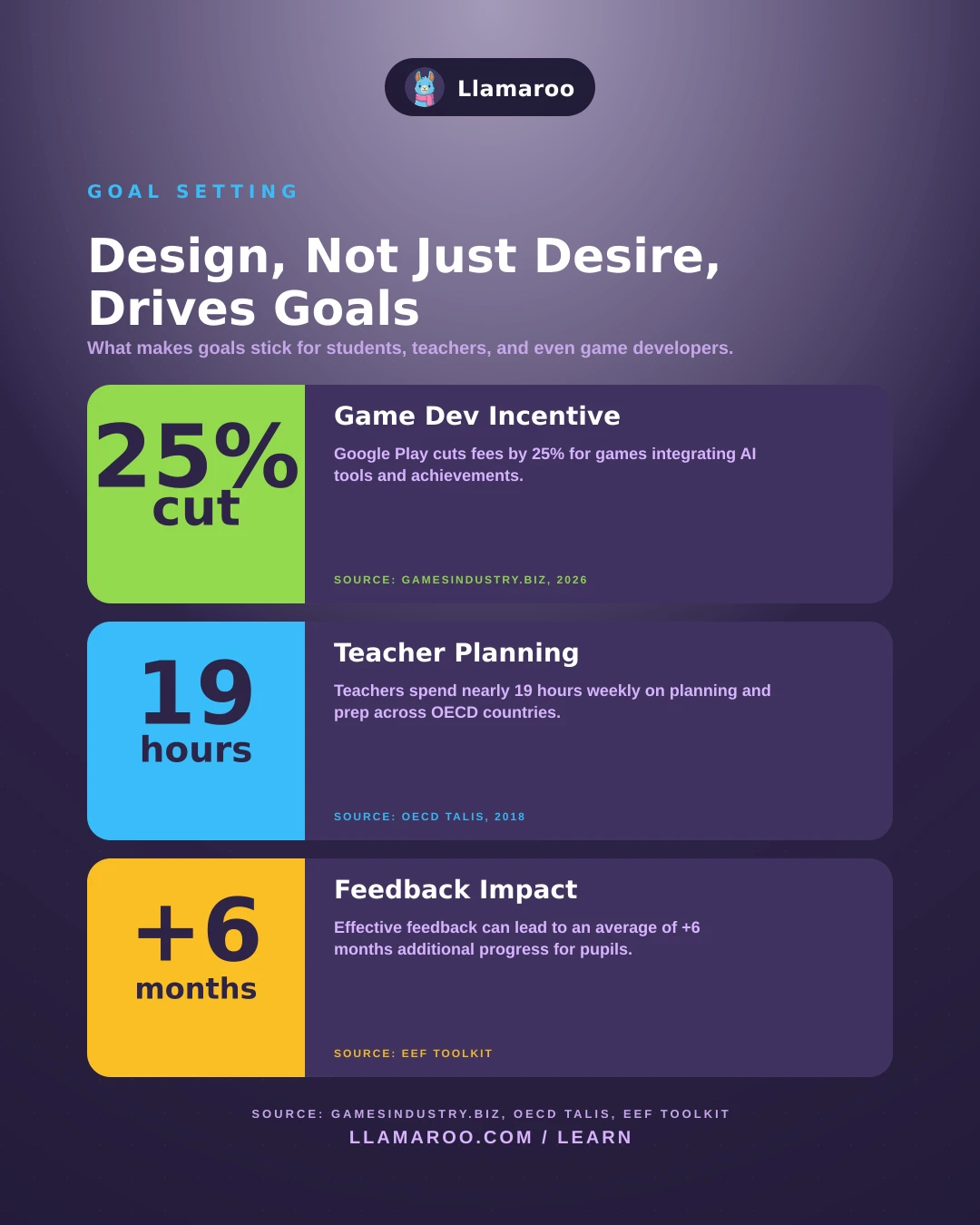
Think about your favorite game. It doesn't just tell you to 'win.' It gives you a small, clear objective, lets you try, and then immediately shows you the result. You learn from that feedback and move to the next step. This tight feedback loop is what keeps us engaged and motivated. This principle is so powerful that even major tech platforms like Google incentivize game developers to integrate features like AI assistants and achievements, cutting their store fees by 25% for those who do.
In education, this means moving beyond abstract goals to concrete, actionable steps. Ofsted reports, for example, often emphasize the importance of a well-structured curriculum and effective teaching that supports student progression. A good curriculum naturally provides those clear steps and opportunities for feedback.
The magic happens in the 'unsaid' — the feeling of accomplishment that comes from making progress, rather than just being told you should. As Psyche.co notes, sometimes the most powerful messages are hinted at, not explicitly stated. That's the intrinsic motivation we're aiming for.
Common Misconception
Is this just 'gamification'?

Porto
Practical takeaways for teachers and parents
Designing effective goal loops doesn't mean turning every lesson into a video game. It means applying the core principles of engagement to make learning feel more purposeful and rewarding. Teachers already spend nearly 19 hours weekly on planning and preparation, so efficient strategies are crucial.
- Break it down: Help students break big goals (like 'master fractions') into small, achievable steps (like 'solve 5 fraction addition problems').
- Instant feedback: Provide immediate, specific feedback. Tools can help automate this, freeing up your time. The EEF Toolkit highlights how effective feedback can lead to an average of +6 months of additional pupil progress.
- Visualize progress: Use checklists, progress bars, or simple charts so kids can see how far they've come and what's next. This makes the effort feel worthwhile.
- Celebrate small wins: Acknowledge effort and progress, not just the final outcome. This reinforces the positive loop and builds confidence.
- Use AI wisely: AI tools can help teachers quickly generate differentiated, step-by-step tasks with built-in feedback, reducing planning workload and making it easier to implement these design principles.
By focusing on the design of the learning journey, we empower students to not just set goals, but to truly achieve them, building their confidence and love for learning along the way.
Final Hop
The biggest shift in goal setting?

Llamaroo
Turn the next learning objective into a journey your students or your child can actually complete
Llamaroo helps teachers create playable, story-driven lessons from a prompt, voice note, or existing materials, making goal achievement a designed experience.