Holistic view
Why Attendance Is a Safety Issue, Not Just a Truancy Problem
When students are absent, it's often a signal about the school environment. From civil rights probes to daily well-being, attendance is tied to safety and belonging.


For elementaryprimaryprimary and middle schoolsecondarysecondary teachers and parents, student attendance often feels like a straightforward metric: either your child is in school, or they are not. But beneath the surface of attendance data lies a complex web of factors, many of which are deeply tied to a child's sense of safety and belonging within their school environment. This article explores how attendance is a vital indicator of a school's health, drawing on insights from both US and UK contexts.
In the US, the Office for Civil Rights (OCR) actively investigates complaints of discrimination, including those related to antisemitism, Islamophobia, or other forms of harassment. A recent example is the OCR probe into New York City schools stemming from complaints about teacher-led seminars. These investigations, part of OCR's mandate under Title VI of the Civil Rights Act, highlight that schools have a legal and ethical obligation to ensure a safe and non-discriminatory environment for all students. When this environment is compromised, it can directly impact a student's willingness and ability to attend.
Similarly, in the UK, the Department for Education (DfE) closely monitors pupil attendance in state-funded schools. While headline figures often focus on overall attendance rates, the underlying reasons for authorised and unauthorised absences are crucial. Factors like bullying, a lack of feeling safe, or even systemic issues within the school culture can contribute to a child's reluctance to attend, leading to what is often termed 'emotionally based school avoidance'. The summary of this data does not provide specific numbers, but highlights the importance of understanding the types of absence.
Common misconception
Is it just about 'getting them to school'?

Peep
Pin this. Share this.
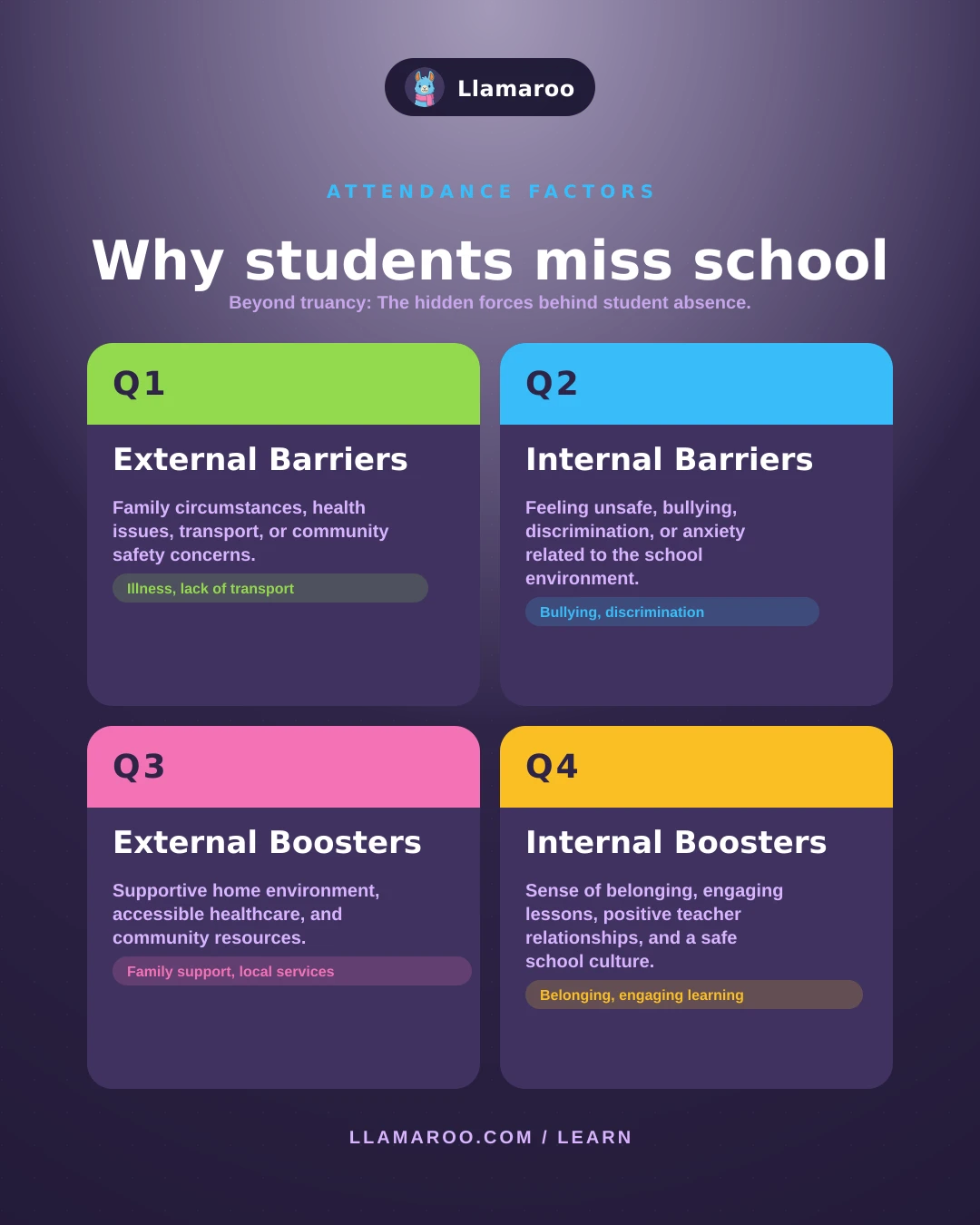
Beyond the numbers: The human cost of absence
For teachers, managing attendance is an added workload, but the deeper concern is the impact on the student. When a child is consistently absent, they miss out on crucial learning opportunities, social development, and the sense of belonging that comes from being part of a school community. This can create a negative feedback loop: absence leads to falling behind, which increases anxiety, making school even less appealing.
In the US, districttrusttrust leaders and teachers are increasingly aware that a hostile school environment can lead to civil rights complaints and federal investigations, as seen with the OCR's annual reports. These are not just legal matters; they are indicators of a breakdown in the school's ability to provide an equitable and safe learning space. For UK schools, DfE guidance on teacher working lives often touches on the challenges teachers face in supporting student well-being, which directly impacts attendance.
- Safety and Belonging: A child needs to feel physically and emotionally safe to attend school regularly.
- Mental Health: Anxiety, depression, or trauma can manifest as school avoidance, requiring sensitive support.
- Curriculum Engagement: If learning feels irrelevant or overwhelming, it can reduce a child's motivation to attend.
- Teacher Workload: Identifying and supporting absent students adds significant pressure on already stretched teachers.
Thinking deeper
What is the school's role?

Fred
Shifting the approach to attendance
| Feature | Reactive Approach | Proactive Approach |
|---|---|---|
| Focus | ||
| Problem framing | Truancy, rule-breaking | Well-being, belonging, safety |
| Intervention | Punishment, legal action | Support, dialogue, environmental change |
| Data use | Counting absences | Understanding reasons, trends, impact |
| Teacher role | Enforcer, reporter | Supporter, observer, advocate |
Focus
- Problem framingWell-being, belonging, safetyTruancy, rule-breaking
- InterventionSupport, dialogue, environmental changePunishment, legal action
- Data useUnderstanding reasons, trends, impactCounting absences
- Teacher roleSupporter, observer, advocateEnforcer, reporter
A proactive approach fosters an environment where students want to attend because they feel safe and valued.
Create engaging lessons that make every student feel seen and supported
Llamaroo helps teachers build interactive, inclusive learning experiences that foster a sense of belonging and make students excited to be in class.