Rethinking Practice
When Homework Gets Scrapped: It's About Attention, Not Laziness
When schools scrap homework or teachers feel forced to 'teach to the test,' it's often a sign of broken attention loops and unsustainable workload.


In a rural Louisiana school district, a big change just happened: no more required homework. For 2,500 students, from the youngest learners up through high school, the nightly battle over schoolwork at home is over, at least for a semester. This move, reported by Hechinger Report, highlights a growing frustration among parents, students, and teachers with traditional homework.
This isn't just a US trend. In the UK, teachers often voice concerns about the intense pressure to 'teach to the test,' driven by accountability frameworks like Ofsted inspections. As noted by Chartered College, this can lead to content overload and significant teacher workload, without necessarily improving deep learning. Both scenarios point to a deeper issue: when academic tasks create more friction than learning.
Common misconception
Are kids just avoiding work?

Peep
Pin this. Share this.
The Attention Economy of Learning
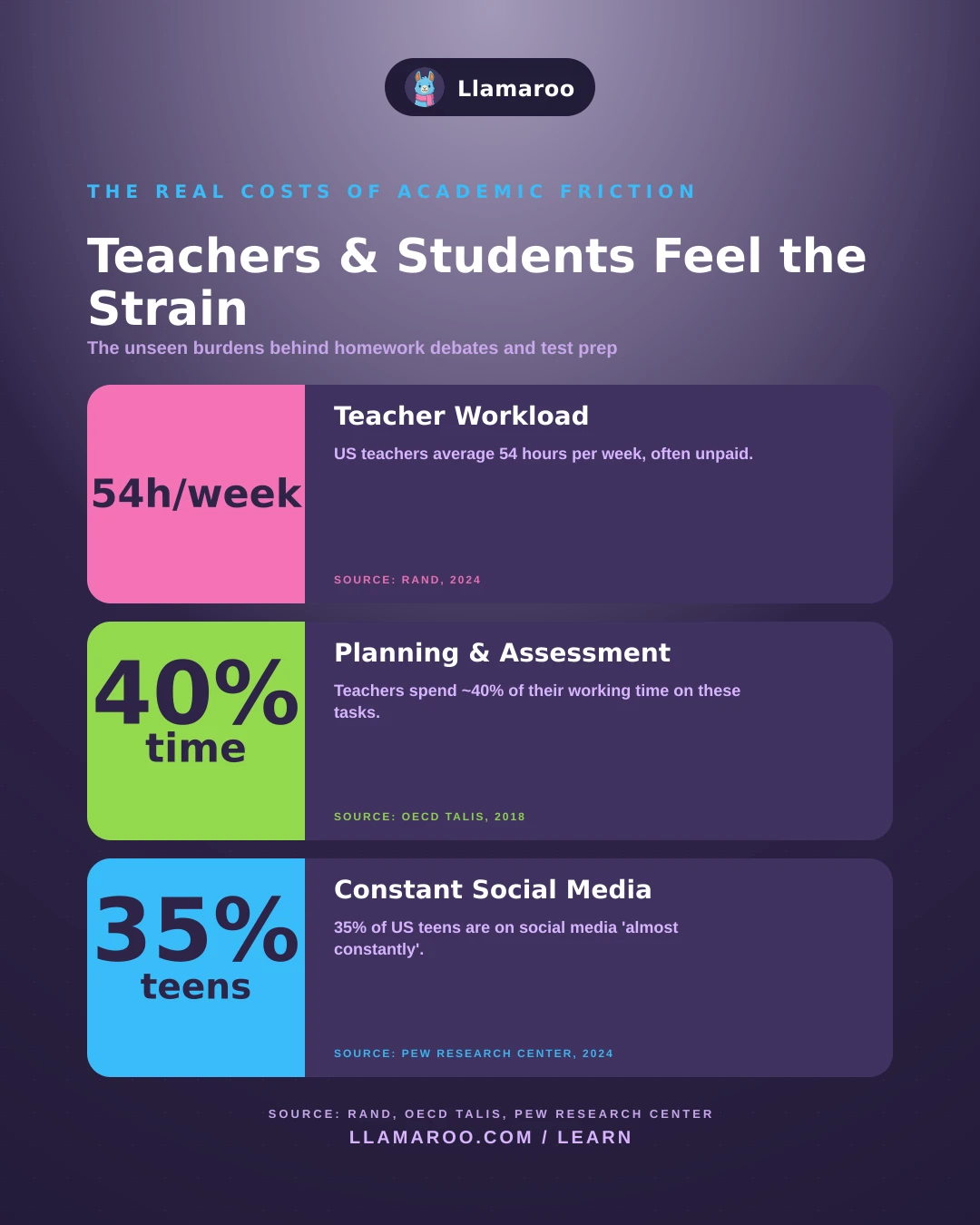
In a world where 35% of US teens say they are on social media 'almost constantly,' holding attention for traditional academic tasks is harder than ever. Kids aren't necessarily less capable; their attention is simply pulled in many directions, constantly seeking novelty and instant gratification. This makes the design of learning tasks even more critical.
From a game design perspective, engagement thrives on clear goals, immediate feedback, and a feeling of competence. When these are absent, motivation dwindles. Think about it: a game tells you exactly what to do, responds instantly, and shows your progress. Traditional homework often does the opposite: vague instructions, delayed grading, and an invisible path to mastery.
- Clear Goals: Kids need to know what they're trying to achieve, not just what they're doing.
- Immediate Feedback: Knowing if an answer is right or wrong right away helps them self-correct and learn faster.
- Visible Progress: Seeing how far they've come, or how close they are to a goal, keeps motivation alive. This taps into the psychological need for competence and autonomy, fundamental to Self-Determination Theory.
- Calibrated Challenge: Tasks should be hard enough to be interesting, but not so hard they cause frustration and shutdown.
Making practice stick
How can we make practice better?

Barnaby
Supporting Teachers, Not Just Students
This shift isn't just about student engagement; it's also about teacher workload. US teachers already work an average of 54 hours per week, and globally, teachers spend around 40% of their working time on lesson planning and assessment, according to OECD TALIS data. Asking them to individually redesign every practice task for optimal attention is simply unsustainable.
This is where smart tools come in. AI can help teachers create engaging, differentiated practice loops that offer immediate feedback and track progress, without adding hours to their already stretched schedules. Imagine turning a standard worksheet into a personalized, story-driven challenge in minutes. This frees teachers to focus on the human connection in the classroom, knowing the practice is working effectively.
Transform practice from a chore into a captivating challenge
Llamaroo helps teachers create playable, story-driven lessons from a prompt, voice note, or existing materials, giving students the feedback and engagement they need.