Child Psychology + Game Design
When Learning Feels Overwhelming: The Power of Managed Complexity
When learning feels like 'too much,' it's often a design problem, not a child problem. Managed complexity turns overwhelm into engagement.


Have you ever seen your child or students freeze up, not because the task is too hard, but because it feels like a giant, undefined blob? That feeling of being 'scared of everything' or overwhelmed by a task is a common experience, and it often points to a design problem, not a child's failing.
The Child Mind Institute highlights that fears like worrying about judgment or not having control are patterns seen in anxiety. When learning tasks feel like they lack clear steps or immediate feedback, they can easily trigger these anxieties, leading to disengagement. This isn't just about individual kids; large-scale trends like student attrition, as reported by Larry Ferlazzo, can stem from a systemic failure to keep students feeling capable and connected.
A common feeling
When 'too much' feels like 'everything'

Barnaby
Pin this. Share this.
The game design secret: managed complexity
For years, many digital learning tools focused on making experiences 'frictionless' – stripping away complexity to make things as easy as possible. But the Naavik digest points out that some of the most engaging games, especially from Eastern developers, embrace 'content overload and complex systems.' They don't shy away from depth; they manage it so players feel challenged, not overwhelmed.
This is where the idea of 'managed complexity' comes in. It's about breaking down big, challenging goals into small, clear, achievable steps. Each step needs immediate feedback, so your child knows they’re on the right track. This process builds executive function skills, as described by Harvard's Center on the Developing Child, helping kids plan, focus, and self-correct.
- Clear Goals: What's the immediate objective? Not just the end goal, but the very next micro-step.
- Scaffolded Steps: Break down complex tasks into manageable chunks, providing support as needed.
- Immediate Feedback: Let students know right away if their action was correct or how to adjust.
- Challenge-Skill Balance: As Mihaly Csíkszentmihályi's 'Flow' theory suggests, engagement peaks when the challenge matches the skill level, preventing both boredom and anxiety.
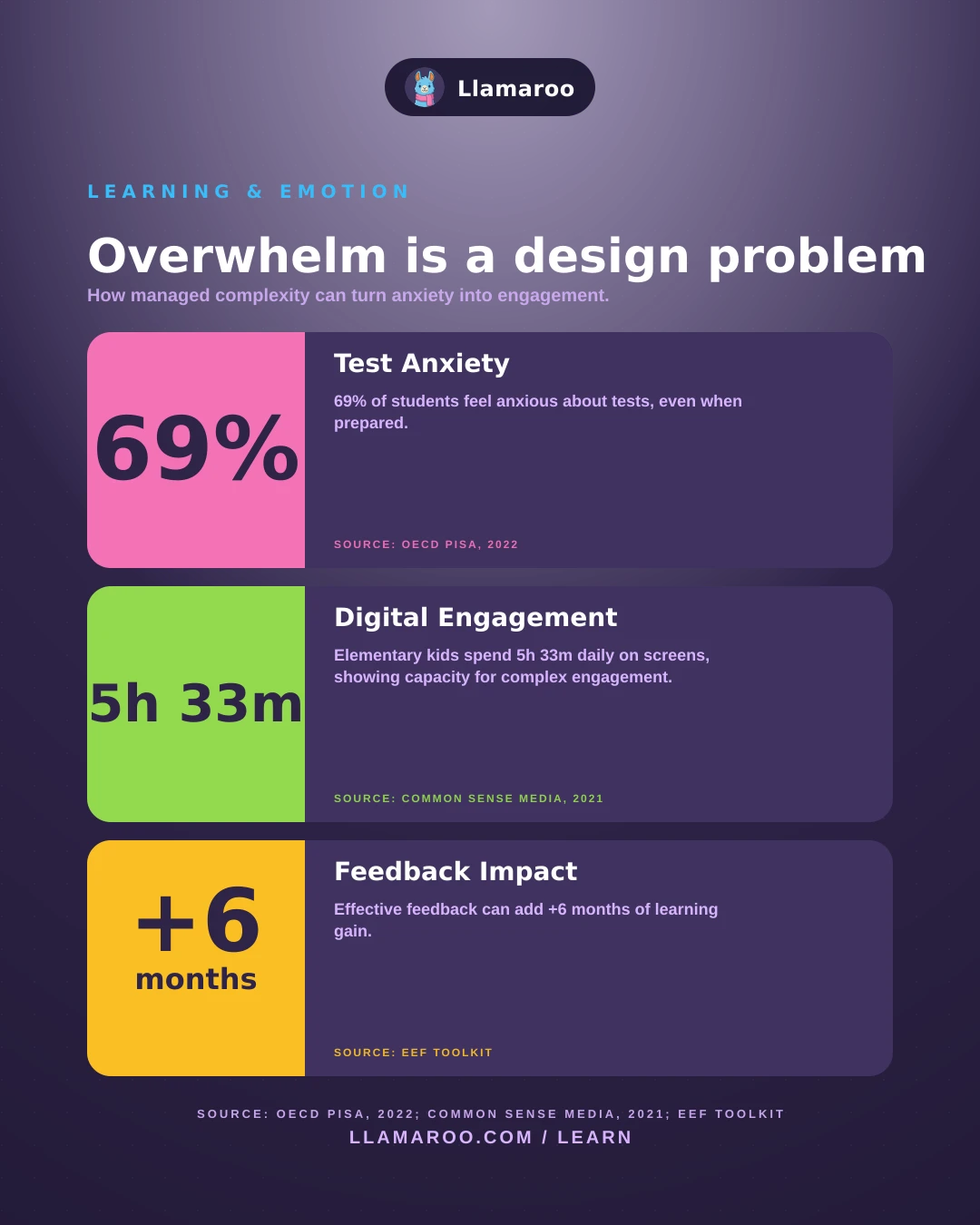
- 69%
- of OECD students feel anxious about tests (PISA, 2022)
- 5h 33m
- ElementaryPrimaryPrimary kids' daily screen time shows engagement capacity (Common Sense Media, 2021)
- +6 months
- learning gain from effective feedback (EEF Toolkit)
Challenging a myth
Is 'frictionless' always better?

Bandit
What this means for your classroom and home
For teachers, creating an environment of managed complexity means carefully designing lessons that scaffold learning, provide clear success criteria, and offer timely feedback. In the UK, this ties into DfE guidance on safeguarding, ensuring a secure base from which students can confidently explore challenging material. In the US, it aligns with state standards that emphasize critical thinking and problem-solving, requiring students to navigate complex topics with appropriate support.
- Break it Down: Instead of one large assignment, create several smaller, interconnected tasks.
- Be Specific: Clearly state what success looks like for each mini-task.
- Provide Tools: Offer checklists, sentence starters, or graphic organizers to help organize thoughts.
- Celebrate Small Wins: Acknowledge progress at each step, not just at the end. This keeps motivation high and reduces the feeling of being overwhelmed.
By applying these principles, you can transform intimidating learning experiences into engaging journeys where students feel competent, in control, and excited to tackle the next challenge. It’s about building confidence through capability, one well-designed step at a time.
Turn overwhelming topics into engaging, manageable lessons
Llamaroo helps teachers create playable, story-driven lessons from a prompt, voice note, or existing materials, making managed complexity simple.