Policy & Practice
Screen Time Limits Aren't Less Tech, They're Better Tech
New screen time policies are pushing schools to rethink digital learning. It's not about banning screens, but about making screen time more active and engaging.


When you hear about schools setting limits on screen time, like the recent decision by the Los Angeles Unified School District (LAUSD) starting in 2026-27, it's easy to think it's a blanket ban on technology LAUSD screen time policy. But the real story is more nuanced and, frankly, exciting for educators. It's not about taking away valuable tools, but about using them more intentionally.
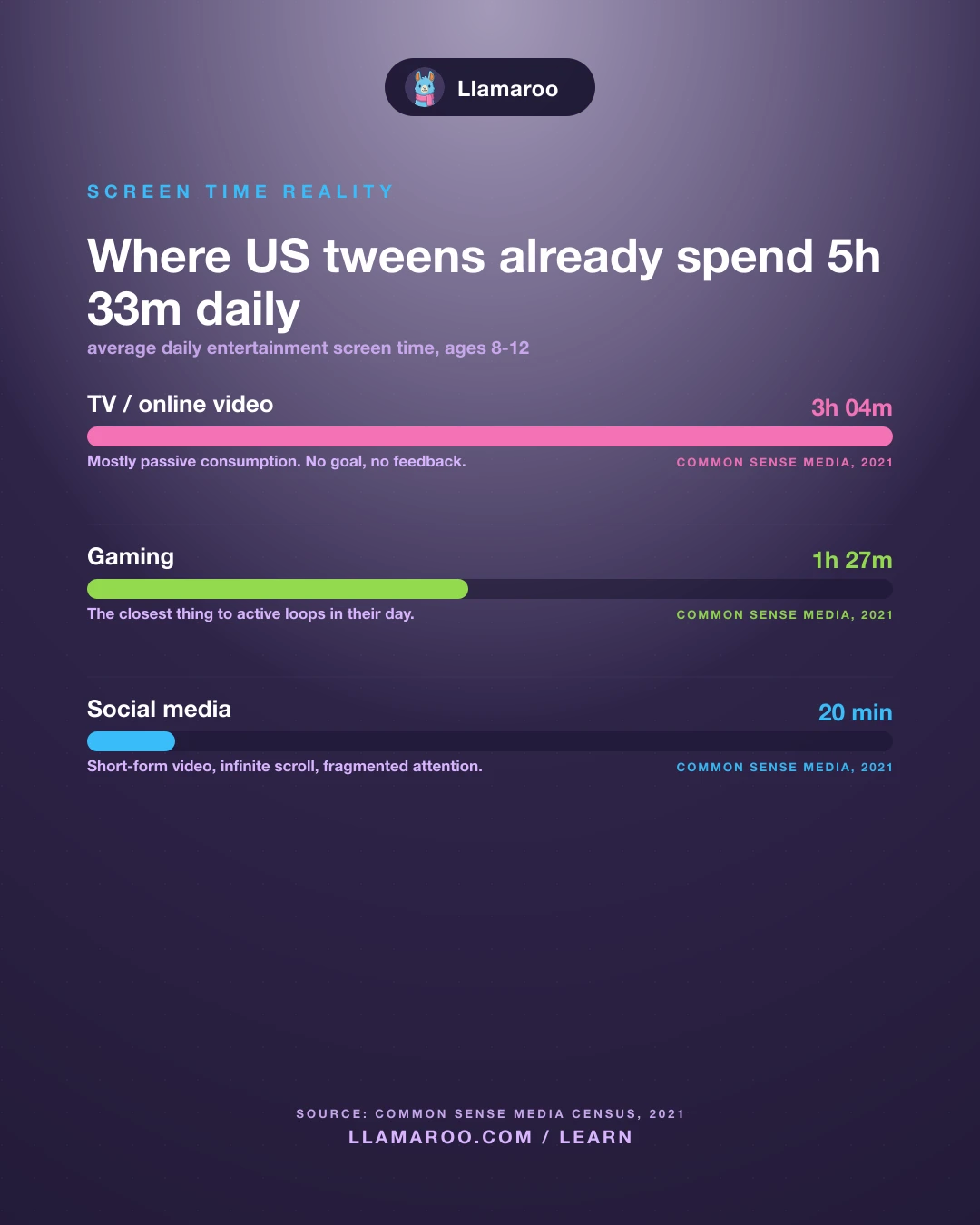
Here is the part that is easy to miss. According to the Common Sense Media 2021 Census, US tweens (8-12) already average 5 hours 33 minutes of entertainment screen time per day, and teens (13-18) average 8 hours 39 minutes. Most of that time is passive: 3h 04m of TV and online video for tweens, then 1h 27m of gaming, with 20 minutes of social. School is the only screen window educators can shape. Cutting school screen time without raising its quality just hands those minutes back to the algorithm.
For US elementaryUK primaryUK primary teachers, this shift represents both a challenge and an opportunity. The challenge is adapting existing lessons and finding new ways to engage students. The opportunity is to move beyond passive screen consumption to digital experiences that truly foster attention, critical thinking, and active participation.
Common misconception
Are all screens bad for kids?

Bandit
Pin this. Share this.
From passive consumption to active engagement
The core issue isn't the screen itself, but what happens on it. Passive screen time, characterized by endless videos or unguided browsing, often leads to reduced attention spans and less cognitive engagement. Active digital learning, however, can be a powerful tool.
- Clear Goals: Students know exactly what they're trying to achieve.
- Immediate Feedback: Actions have quick, meaningful responses, keeping students in the learning loop.
- Visible Progress: Learners can see their advancement, which boosts motivation and a sense of accomplishment.
- Interactive Design: Activities require decisions, problem-solving, and creation, not just observation.
This is where the principles of game design shine. Good educational games, like those you can build with Llamaroo, inherently create these active loops. They leverage attention, curiosity, and the desire for mastery, making learning feel less like a chore and more like a challenge to overcome.
Teacher's challenge
How do teachers make this shift?

Hippo
Passive screens vs. active learning tools
| Feature | Passive Screen Time | Active Digital Learning |
|---|---|---|
| Experience | ||
| Student role | Receiver of information | Participant and creator |
| Attention | Fleeting, easily distracted | Sustained, goal-oriented |
| Feedback | Delayed or absent | Immediate and actionable |
| Learning outcome | Surface-level retention | Deeper understanding, skill mastery |
Experience
- Student roleParticipant and creatorReceiver of information
- AttentionSustained, goal-orientedFleeting, easily distracted
- FeedbackImmediate and actionableDelayed or absent
- Learning outcomeDeeper understanding, skill masterySurface-level retention
The shift isn't about reducing exposure to screens, but about maximizing the educational value of every digital interaction.
What to look for in active learning tech
As US districtsUK trustsUK trusts and schools navigate these new policies, the focus should be on selecting and creating digital experiences that align with principles of effective engagement. When evaluating tools or designing lessons, consider these points:
- Interactivity: Does it require the student to make choices, solve problems, or manipulate elements?
- Adaptive Learning: Can it adjust difficulty or content based on the student's performance?
- Gamified Elements: Does it incorporate points, badges, levels, or clear progression paths that motivate?
- Real-time Feedback: Does it tell the student immediately if their answer is correct or offer guidance?
- Teacher Workflow Integration: Does it reduce, not increase, teacher workload by automating grading or lesson creation?
The LAUSD policy, and similar conversations happening globally, aren't a step backward for technology in education. They're a call to action to make our digital tools smarter, more engaging, and more aligned with how children truly learn and maintain attention. It's an opportunity to transform screen time from a passive habit into a powerful engine for active learning.
Transform screen time into active, engaging learning experiences
Llamaroo helps teachers create playable, story-driven lessons from a prompt, voice note, or existing materials, making every digital minute count.