Literacy insights
Beyond Decoding: Why Comprehension is the Real Literacy Challenge
Phonics is a great start, but true literacy means connecting words to meaning. It's about comprehension, not just sounding out. Let's explore why.


Walk into most elementaryprimaryprimary classrooms today, and you will see amazing phonics instruction. Teachers have worked incredibly hard to implement high-quality materials, helping children master sounds and patterns. That is fantastic! But as The 74 argues, decoding words is just the first step. The real magic happens when kids connect those decoded words to meaning, building comprehension.
This challenge is on the minds of policymakers too. In the UK, the Curriculum and Assessment Review's Final Report emphasizes the need for high standards for all, especially addressing attainment gaps for disadvantaged students and those with SEND. It is about evolving the system to ensure every child truly understands what they read, not just recognizing the words.
Common misconception
Is phonics the whole story?

Peep
Pin this. Share this.
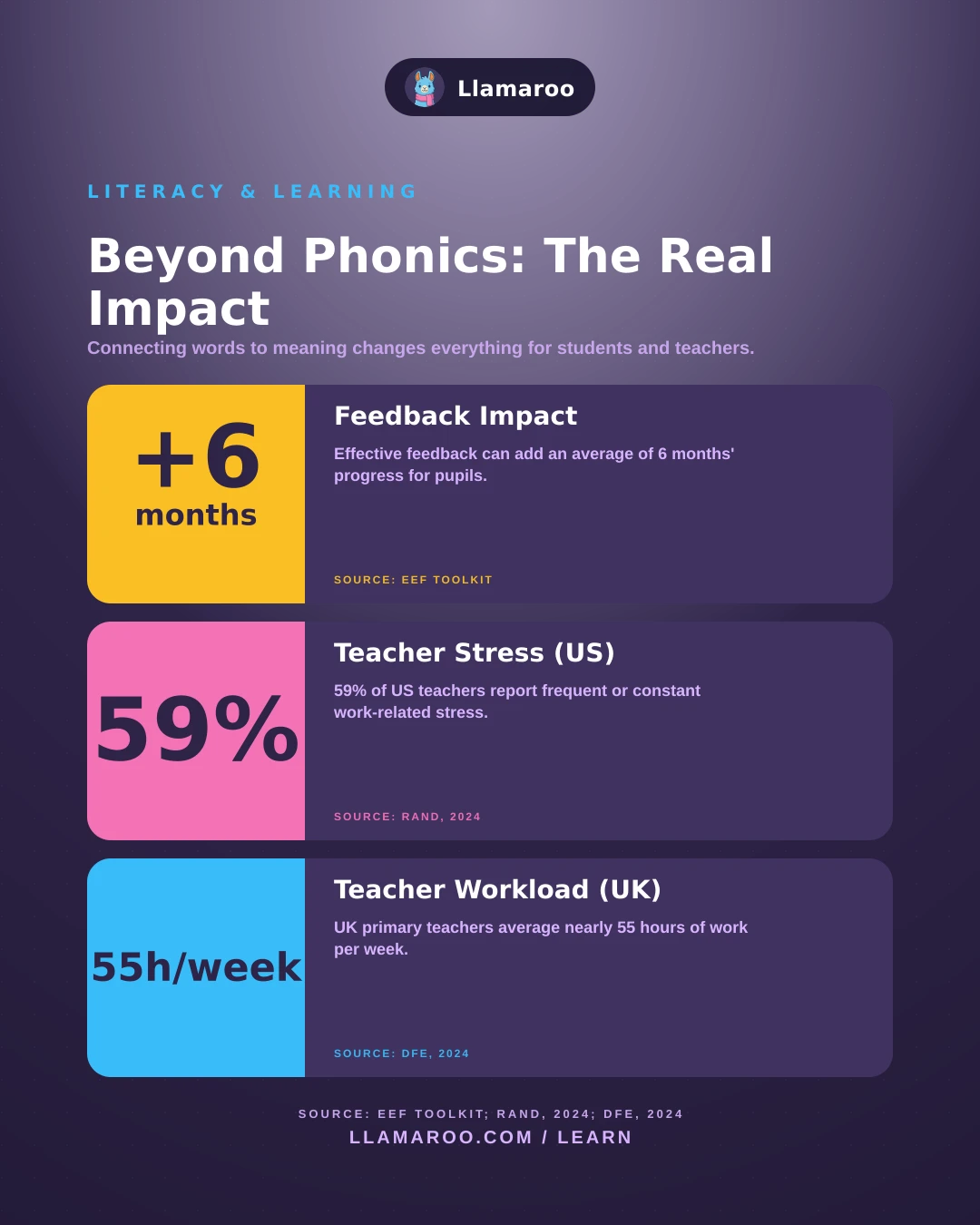
- +6 months
- Average progress from effective feedback (EEF Toolkit)
- 59%
- US teachers frequently or constantly stressed (RAND, 2024)
- 55h/week
- UK primary teacher average workload (DfE, 2024)
Feedback loops for deeper understanding
This is where game design and child psychology offer powerful insights. Games excel at providing immediate, relevant feedback that helps players understand the rules and progress. Similarly, children learn best when their efforts to understand are met with clear signals about whether they are on the right track.
- Clear goals: Children need to know why they are reading and what they are looking for.
- Immediate feedback: Quick responses help them self-correct and build confidence. The Education Endowment Foundation Toolkit highlights that effective feedback can add an average of 6 months' progress for pupils.
- Scaffolded complexity: Tasks should gradually increase in difficulty, providing support as needed. Harvard's Center on the Developing Child emphasizes scaffolding for executive function development.
Teachers are already stretched. In the US, 59% of teachers report frequent or constant work-related stress. In the UK, primary teachers average nearly 55 hours of work per week. Creating rich, feedback-driven comprehension activities can feel like another burden.
Practical application
How can we make meaning-making easier?

Rocket
Help your students connect words to meaning, effortlessly
Llamaroo helps teachers create playable, story-driven lessons that build deep comprehension, from a simple prompt or existing materials.