Engaging lessons
Projects & Play: How Collaboration Captures Attention
Project-based learning and collaborative play aren't just fun, they're powerful tools for capturing student attention and building deeper engagement.


Have you ever noticed how some activities just grab kids' attention, while others feel like pulling teeth? Often, the difference lies in whether the task feels like a project they own, or a collaborative game they play with others. This is true whether you are in a US elementaryUK primaryUK primary classroom or at home.
A Wisconsin P.E. teacher, for example, found huge success engaging his elementaryprimaryprimary students by having them create games from scratch or design brain boost videos. This isn't just a quirk of P.E. It taps into something fundamental about how children learn and stay engaged.
Common misconception
Isn't play just... play?

Bandit
Pin this. Share this.
Why collaboration and projects work
It turns out that doing things together, and having a clear goal to build towards, is incredibly motivating. Think about twins who grew up always doing activities together, from wrestling to playing ping pong. Their shared experiences and natural collaboration made these activities engaging and memorable.
- Autonomy: Kids get a say in what they do and how they do it, which fuels intrinsic motivation that Self-Determination Theory describes.
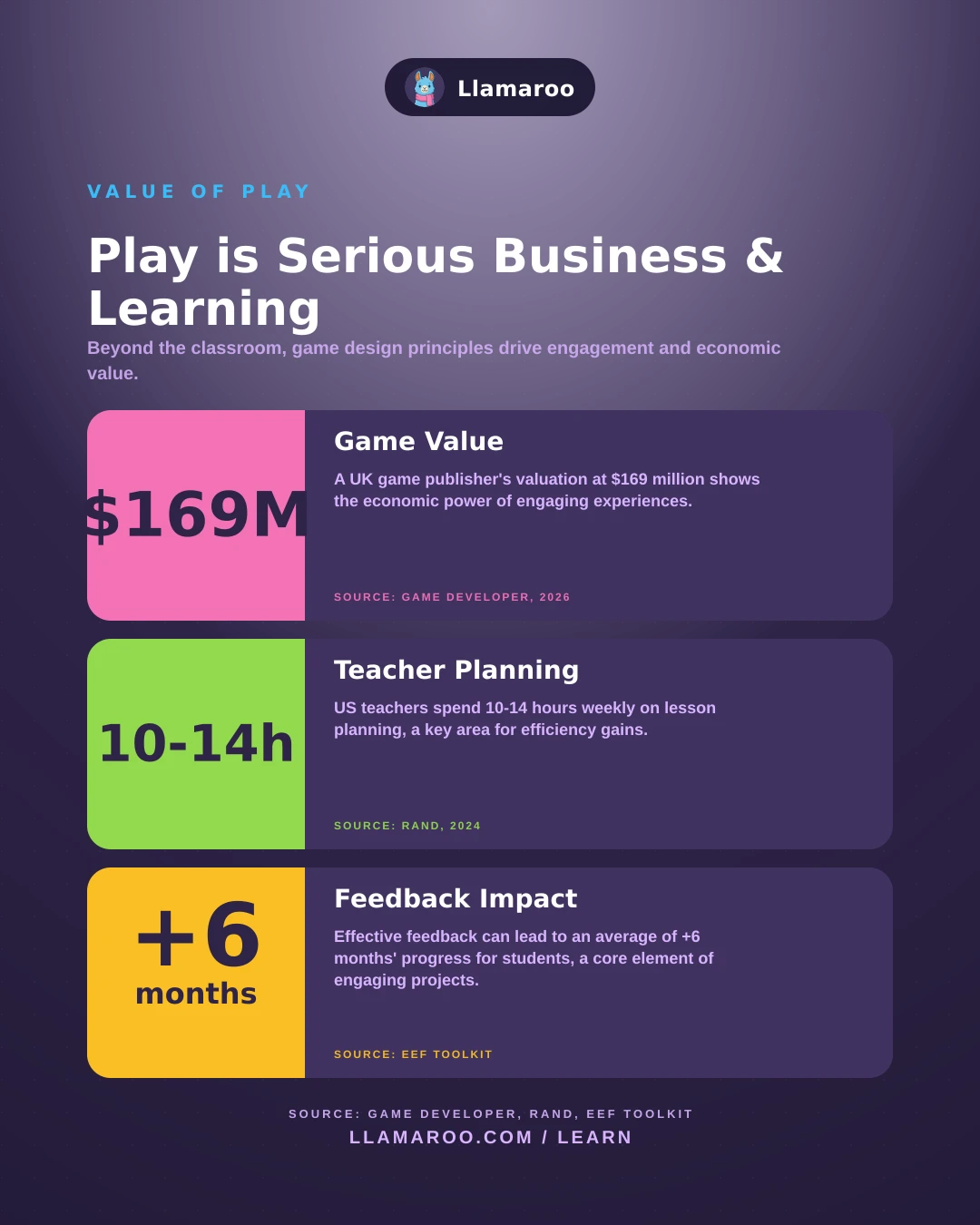
- Competence: They feel capable and see their skills grow as they tackle challenges, especially with immediate and effective feedback. The Education Endowment Foundation's feedback evidence suggests effective feedback can lead to an average of +6 months' progress.
- Relatedness: Working with peers fosters a sense of belonging and shared purpose, making the learning experience richer and more social.
These aren't just 'nice-to-haves.' They are fundamental drivers of attention and deep learning, borrowed straight from the playbook of successful game design.
Parent and teacher perspective
How can we make this happen?

Porto
Making projects and collaboration stick
Whether you are a teacher in the USthe UKthe UK looking at state standards or DfE guidance, or a parent at home, the principles are the same. You want to create environments where children feel empowered to build and discover together.
- Start small: A 'project' does not have to be a month-long endeavor. It could be a 20-minute challenge to design a new game rule.
- Provide clear boundaries: Give students autonomy within a structured framework. This reduces chaos and helps them focus.
- Encourage peer interaction: Design tasks that naturally require students to talk, share ideas, and help each other.
- Celebrate effort and progress: Focus on the journey and the learning, not just the final product. Show them how far they have come.
By shifting from passive consumption to active creation and collaboration, we can transform learning into something truly captivating for our students and children.
Projects & Play, Answered
Project-based learning
3No, it is adaptable for many subjects.
As seen with the P.E. teacher creating games, PBL can be applied across the curriculum, from science and history to language arts and math. It is about the approach, not just the content.
Clear roles and check-ins are key.
Assigning specific roles, setting clear expectations, and having regular check-ins can help keep groups on track and ensure everyone contributes meaningfully.
Not necessarily, it is about screen quality.
Project-based learning can be hands-on or digital. When technology is used for creation and collaboration, it is often more engaging and productive than passive consumption. The focus is on better tech, not just less tech.
Turn your next lesson into an engaging project that captures every student's attention
Llamaroo helps teachers create playable, story-driven lessons from a prompt, voice note, or existing materials, supporting true project-based learning.