Classroom tech
Ed Tech Is About Design, Not Just Screens
The conversation around classroom technology often focuses on screen time. But the real issue is how ed tech is designed and whether it supports learning or simply adds friction for teachers and students.


The conversation around educational technology can feel like a pendulum swing. One moment, we are embracing every new digital tool; the next, we are worrying about screen time and its effects. Lately, there's been a strong reaction to how much ed tech students are using in classrooms, with many feeling there's simply 'too much laptop use' Larry Ferlazzo, 2026.
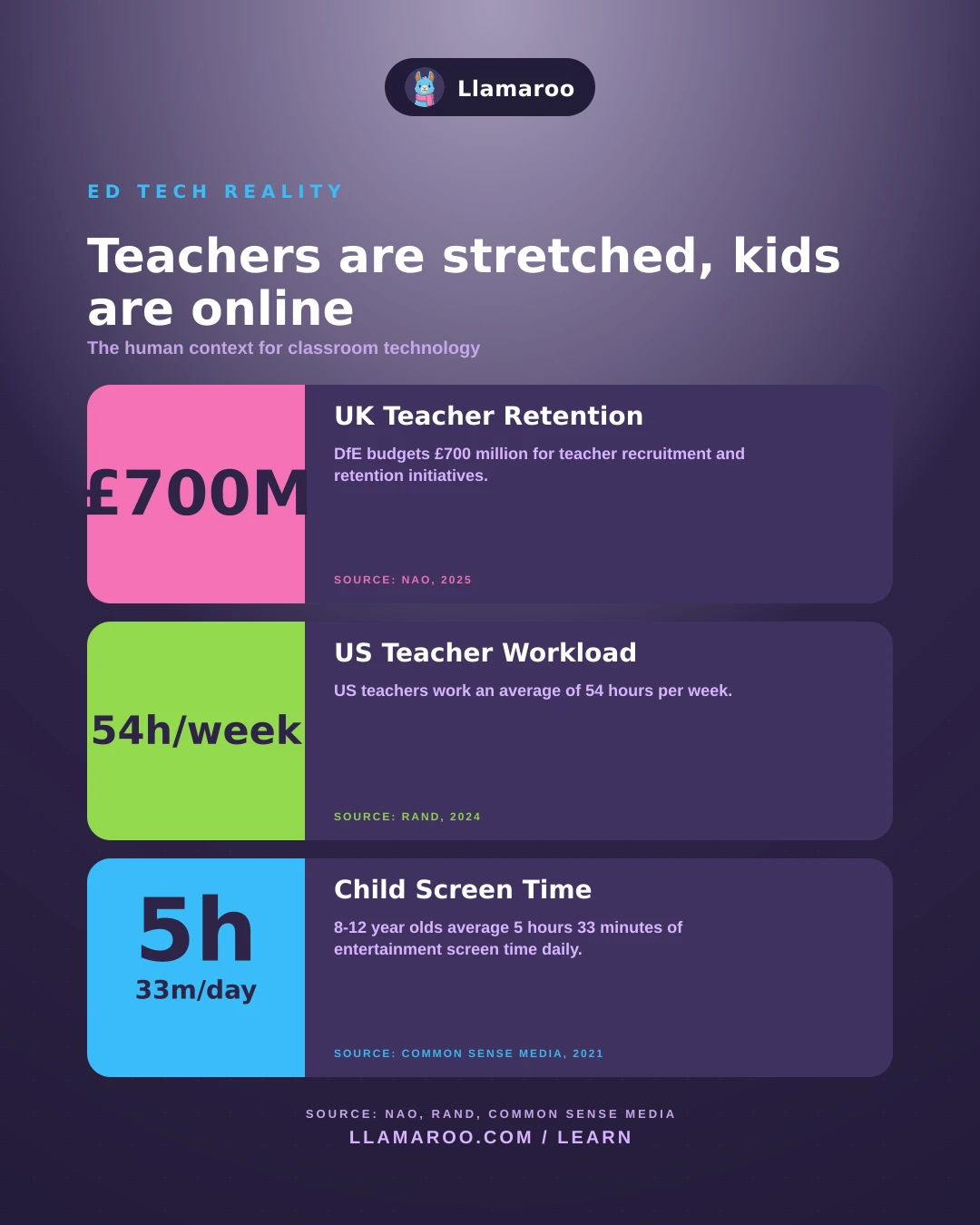
This isn't just a US concern. In the UK, the Department for Education is already investing heavily, budgeting around £700 million in 2024-25 on initiatives to recruit and retain teachers. Teachers are already stretched, and adding poorly designed tech to their plate only makes things harder. The real question isn't how much tech, but how well it's designed to support learning and ease teacher workload.
Common misconception
Is less tech always better?

Peep
Pin this. Share this.
What makes ed tech 'well-designed'?
When we talk about 'too much laptop use,' we often mean tech that simply digitizes old problems. A digital worksheet is still a worksheet. The real power of ed tech, especially with AI, comes from its ability to create dynamic, responsive learning experiences.
- Clear Goals: Does the tech make the learning objective obvious to the student?
- Immediate Feedback: Does it tell students right away if they're on the right track, not hours or days later?
- Adaptive Challenge: Does it adjust to your student's skill level, offering support when needed and increasing challenge as they progress? This is a core idea behind managed complexity.
- Visible Progress: Can students see how far they've come and what's next? This builds a sense of competence, a key driver of intrinsic motivation Ryan & Deci, SDT.
This kind of design is what makes games so engaging. It's also what makes effective 'training' work, whether it's for physical fitness or mental resilience, as mentioned by Child Mind Institute. The consistent, clear feedback loop is what builds skills and confidence, not just the activity itself.
A teacher's perspective
How can teachers spot good ed tech?

Hippo
Beyond the screen: impact on workload and attention
The average US teacher already works around 54 hours per week, and poorly integrated ed tech can easily add to that burden. When tech requires extensive setup, troubleshooting, or manual grading, it undermines its own purpose. Well-designed ed tech should reduce administrative tasks, freeing up teachers for more impactful work like differentiation and personalized support.
For students, the issue isn't just the presence of a screen, but what that screen is asking them to do. If it's passive consumption or frustrating navigation, it contributes to the attention wars we often see. If it's an interactive, goal-driven experience with clear feedback, it can capture and sustain attention effectively. Remember, K-6KS1 to KS2KS1 to KS2 children spend an average of 5 hours and 33 minutes daily on entertainment screens; good ed tech needs to compete with that level of engagement, not just replace a textbook.
- For Teachers: Look for tools that genuinely automate tasks (like lesson generation or initial assessment) and provide actionable insights, not just data dumps.
- For Parents: Ask if the tech helps your child understand why they got something wrong and how to improve, rather than just giving a score.
- For Schools: Prioritize tools that integrate smoothly with existing systems and offer robust, child-safe features, aligning with policies like Common Sense AI Literacy.
Transform your classroom tech from a distraction into a dynamic learning engine
Llamaroo helps teachers create playable, story-driven lessons from a prompt, voice note, or existing materials, designed for engagement and clear feedback.